Learn. Prove it.
Put it to work.
Turn “I know physical AI” into a line you can put on your résumé.
R-Cert is a certification that systematically proves your knowledge and literacy in physical AI and robotics.
Why is knowledge of physical AI and robotics
in such demand now?
A talent gap of 3.26 million
By 2040, Japan will need 4.98 million AI and robotics professionals, but only 1.72 million are expected to be available, leaving a shortfall of 3.26 million (METI estimate). A systematic way to develop talent and certify skills is needed.
Certifications at two extremes
Existing robotics certifications are split between programs for children and those limited to professionals (e.g., an SIer certification with 92 holders). The middle ground for business professionals is completely empty.
It ends at proving knowledge
With existing certifications, passing is the finish line. Nothing links what you learn to real work or careers, so motivation to take the exam fades.
A “just right” physical AI and robotics certification
didn’t exist until now.
Existing robotics certifications are polarized between programs for children and those for on-site professionals.
R-Cert is built for business professionals and students who want to learn about robots and prove what they know.
Made for you
| Certification | Target | Test-takers | Exam fee | Issue |
|---|---|---|---|---|
| Robot Cert. A | Grade 3 and up | ~1,800 per session | ¥3,300–6,800 | Aimed at children |
| Robot Cert. B | Experienced practitioners | 100 (1st session) | ¥7,700–50,000 | High barrier to entry |
| R-Cert | All business professionals & students | Now accepting | From $125 | Passing leads to work |
Our biggest difference:
pass, and it leads to work.
Traditional certifications end at proving knowledge.
R-Cert takes you from proven knowledge → visible skills → real work.
Your results are added to your RobotMateHub tech portfolio
Your priority score for company project matching goes up
A mechanism no other certification offers: show your proven skills to companies
Three levels to prove
the right skills for your career.
Physical AI Passport
All business professionals & students
- Questions50
- Duration60 min
- FormatMultiple choice (4 options)
- Passing score70% or higher
- Target pass rate65–75%
- EligibilityNone
- Exam methodOnline CBT
RoboPro
Deployment managers & engineers
- Questions60
- Duration90 min
- FormatMultiple choice + multiple response
- Passing score70% or higher
- Target pass rate50–65%
- EligibilityPhysical AI Passport recommended
- Exam methodOnline CBT
Robot Specialist
Specialist engineers & researchers
- Questions80
- Duration90 min
- FormatMultiple choice + multiple response
- Passing score80% or higher
- Target pass rate40–55%
- EligibilityRoboPro recommended
- Exam methodOnline CBT
C1Humanoid
C2Service Robot Adoption
C3Autonomous Mobility & AI
C4Robot Integrator
Who is
R-Cert for?
Managers & DX leads in manufacturing
Systematically gain the literacy needed for robot deployment decisions, and strengthen your organization’s DX capabilities.
Career changers & students
Prove your skills for a move into the robotics industry. After passing, you can also access projects on RobotMateHub.
Robot SIer engineers & sales
Objectively prove your hands-on skills, a strong asset for career growth or a job change.
Humanoid developers & researchers
A dedicated humanoid certification. Prove deep expertise in physical AI, bipedal locomotion, and manipulation.
What changes
when you earn R-Cert?
Become sought-after talent in a ¥10 trillion market
The robot market is projected to grow to ¥10 trillion by 2035, while a shortage of 3.26 million professionals is expected. Proving your robot literacy now gives you a decisive first-mover advantage in a rapidly expanding market.
Show your proven skills to companies
Passing R-Cert adds a skill badge to your RobotMateHub profile and raises your priority score for company project matching. It’s fundamentally different from certifications that end once you pass.
Take the exam online, from home
Fully online (CBT). No commuting or test centers. Take the exam from your home PC, anytime, at your own pace.
Supervised by experts across industry, academia, and government
The exam scope, questions, and passing criteria are supervised by practitioners, researchers, a quality assurance specialist, and international experts in AI governance and US–Japan robotics. The certification tests knowledge that works in the real world.
A robotics industry credential you can put on your résumé
Successful candidates receive a digital certificate immediately. Add it to your résumé, business card, or LinkedIn profile to objectively showcase your skills when changing jobs, moving internally, or going for a promotion.
Step up from Passport → Pro → Specialist
Grasp the big picture with Level 1 “Physical AI Passport,” prove practical skills with Level 2 “RoboPro,” and master a specialty with Level 3 “Specialist.” Build your skills step by step as your career grows.
Leading experts supervise
the quality of the certification.
Experts active across industry, academia, and government supervise R-Cert’s exam scope, question design, and passing criteria.
Their expertise in industry practice, academic research, and quality assurance underpins the certification’s credibility.

Rikiya Yamamoto
Founder, RobotMateHub / Representative Director, Business AI Promotion Organization
Launched physical AI businesses at SoftBank Robotics and served as business lead for Boston Dynamics’ “Spot.” Member of METI’s AI governance working group and co-author of the “New Three Laws of Robotics” for Expo 2025 Osaka, Kansai. His many achievements include GUINNESS WORLD RECORDS™ titles and an Amazon bestselling book.

Taku Itami
Lecturer, School of Science and Technology, Meiji University / R-Cert Ambassador
Leads the Smart Mechatronics Laboratory at Meiji University’s School of Science and Technology. After earning a Ph.D. in Systems Engineering from Mie University, he served as an assistant professor at Aoyama Gakuin University before his current role. Recipient of the JSME Miura Award and the Mie University President’s Award. His lab has 26 members, with graduates joining major companies such as NTT DOCOMO and Honda.
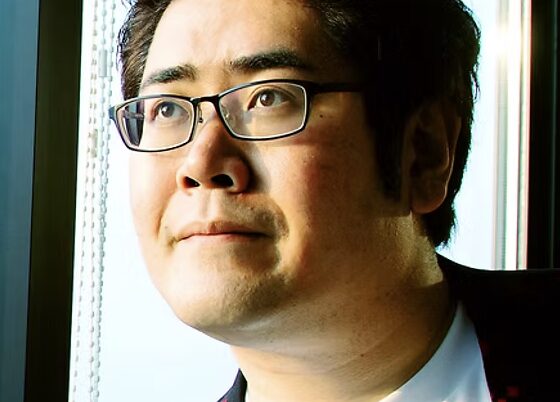
Yasutaka Eda
CBP, Atwa Japan / FM Radio Producer / R-Cert Ambassador
A graduate of Keio Academy of New York and Keio University’s Faculty of Economics. After working at strategy consulting firms including PwC and Roland Berger, he held roles at companies such as Rakuten and Crocs Japan, and also headed a logistics robotics business. As an FM radio producer, he has produced 100+ programs, supporting clients through both business design and storytelling.

Toshihisa Moriyama
Quality Assurance Specialist / R-Cert Learning Content Advisor
Has spent more than 25 years in quality assurance for advanced products, including humanoid robots. He worked on “PALRO” at Fujisoft and on physical AI development at Aldebaran, covering quality management across the entire product lifecycle, from development to market launch and after-sales service. Drawing on hands-on field experience, he shares the essentials of robot development that balances technology with peace of mind.

Sara Filipčić
Founder, Institute for Humane Robotics / R-Cert Ambassador
An AI governance expert who served as a mentor at Harvard University for two consecutive years and has spoken at the World Economic Forum, Stanford University, and UC Berkeley. She leads the development of safety standards for social robots and won the top award at the Women in AI Summit. She works at the frontier of human-centered robotics ethics and international norm-setting.

Montana Gray
US–Japan Robotics Strategist / R-Cert Ambassador
A Stanford University graduate (master’s in East Asian Studies). As a US–Japan robotics strategist specializing in human–robot coexistence, Montana connects Japan’s human-centered design with the commercial scale of the US, and currently leads US partnerships for a humanoid robot company, driving business across the Japanese and US markets.
Our supervisors are continuously involved in defining the exam scope, reviewing questions, and setting passing criteria. By combining the perspectives of practitioners, researchers, business producers, and international experts, R-Cert tests knowledge that works in the real world.
Organizations whose members
take R-Cert
R-Cert is being taken across a wide range of organizations, including universities, major electronics manufacturers, and robotics companies.
* The organizations listed above are those to which test-takers belonged at the time of their exam.
Apply online, take the exam anytime.
Done in 3 steps.
No fixed exam dates, no test centers.
Choose your level, complete payment online, and take the exam from your home PC whenever you’re ready.
Exam dates: anytime
There are no fixed exam dates. Take the exam whenever you’re ready, at a time that suits you, entirely online from your home PC.
Exam format: online CBT
All levels are taken online via CBT. Level 1 is multiple choice (4 options); Levels 2 and 3 combine multiple choice with multiple-response questions. Successful candidates receive a digital certificate immediately.
3 steps from application to certification
Choose your level
Pick the level that fits your career: Level 1 Physical AI Passport for the big picture, Level 2 RoboPro for practical deployment skills, or Level 3 Specialist for deep expertise in one of four categories. The exam scope for each level is published on this page.
Apply and pay online
Complete payment securely via Stripe (credit card). After payment, you’ll receive an email with your exam ID and login details. Each application covers one exam attempt.
Take the exam online
Log in and take the online CBT exam from your home PC at any time. Successful candidates receive a digital certificate immediately, and your result is added to your RobotMateHub profile as a skill badge.
Level 1 Physical AI Passport
Exam Scope
Certifies people who can correctly understand robots and talk about them accurately.
Robotics Overview
Definition, classification & history of robots, market trends, key players
Hardware Fundamentals
Sensors, actuators, drive systems, power, enclosure design
Software & AI Fundamentals
ROS overview, physical AI, foundation models, VLA
HRI & UX
Communication design, the uncanny valley, managing expectations
Safety, Ethics & Law
Robot safety basics, product liability, privacy, AI ethics
Robots & Society
The future of robots and work, social acceptance, deployment cases
RobotMateHub Philosophy
New Three Laws of Robotics, Robot Friendly 6 Scenes
Level 2 RoboPro
Exam Scope
Certifies people who can make practical decisions on robot deployment, operation, and development.
Mostly scenario-based questions.
Hardware Fundamentals & Applications
HW architecture, sensor fusion, actuator control
Software Development
ROS 2, SLAM, object recognition, physical AI foundation model integration
Communication & Cloud Integration
Cloud/edge integration, communication protocols, OTA, fleet management
Application Development
API design, management systems, dashboards
UX Design
HRI design process, interaction design
Law & Safety Standards
Robot-related laws, safety standards & certification, data governance
Deployment in Practice
Case studies, on-site deployment, failure cases, improvement cycles
Business Models & TCO
Business model types, TCO analysis, ROI evaluation
Maintenance & Operations
Maintenance systems, inspection, troubleshooting, SLAs
Integrated Scenarios
Scenario-based questions spanning multiple fields
Level 3 Robot Specialist
4 Categories
Choose the category that fits your career.
Prove deep expertise and practical skills in your field.
Humanoid Robots
Humanoid developers & researchers
- Bipedal locomotion dynamics & control
- Physical AI foundation models (GR00T, VLA)
- Sensing & perception
- Manipulation
- HRI & UX design
- Safety standards & ethics
- Hardware design
- Commercialization & market trends
Service Robot Adoption
Deployment PMs & consultants (user companies / buyers)
- Deployment project management
- Case studies & failure analysis
- TCO analysis & ROI evaluation
- Safety standards & certification
- Maintenance systems & SLA design
- On-site adoption & change management
- Application integration
- Business model design
Autonomous Mobility & AI
Autonomous mobility developers & drone engineers
- SLAM & path planning
- Physical AI & foundation model integration
- ROS 2 architecture
- Sensor fusion
- System integration & fleet management
- Simulation environments
- Hardware design
- Development process & CI/CD
Robot Integrator
SIer staff & build engineers (vendors / builders)
- System integration & multi-robot systems
- Safety standards & risk assessment
- TCO analysis & ROI evaluation
- Maintenance systems & troubleshooting
- Hardware selection & design
- Application integration
- Project management
- Communications & network setup
C2 vs. C4: C2 is for PMs and adoption leads at user companies that buy and use robots, while C4 is for engineers at SIers that design, build, and deliver robots. They share some knowledge areas (such as ROI analysis and SLAs), but the perspective and depth of the questions differ.
Exam Fees
One flat fee per exam attempt, with no additional costs.
Choose your level and apply online. You can take the exam as soon as you’re ready.
| Level 1 Physical AI Passport |
Level 2 RoboPro |
Level 3 Specialist |
|
|---|---|---|---|
| Exam fee (USD, incl. tax) | $125 | $180 | $210 |
| Questions / Duration | 50 questions / 60 min | 60 questions / 90 min | 80 questions / 90 min |
| Passing score | 70% or higher | 70% or higher | 80% or higher |
| Validity | 3 years | 3 years | 2 years |
* All prices are in US dollars (USD) and include any applicable taxes. There are no additional charges.
* Validity: 3 years for Levels 1 and 2, 2 years for Level 3 (renewal required).
* An exam fee is required for each attempt. If you do not pass, please apply again to retake the exam.
Apply for the Exam
Choose your level below to proceed to payment.
For Level 3, select the category you want to be certified in.
Payments are processed securely via Stripe (credit card). Each application covers one exam attempt (to retake after failing, please apply again).
After payment, you’ll receive an email with your exam ID and login details.
Frequently Asked Questions
Answers to common questions about taking the exam, learning, fees, certificates, and more.
If your question isn’t answered here, feel free to contact us.
When can I take the exam? Are there fixed exam dates?
Are there any eligibility requirements?
How much is the exam fee?
Which level should I start with?
What’s the difference between C2 and C4 in Level 3?
What are the question formats and passing criteria?
Can I retake the exam if I don’t pass?
What do I receive when I pass? Can I put it on my résumé?
Does passing really lead to work?
Does the certification expire?
What payment methods are accepted?
Who supervises the certification? Is it credible?
If you have a question that isn’t answered here, feel free to contact us.
The future of robotics talent
starts with RobotMateHub.
Learn. Prove it. Put it to work.
Start by exploring the details of R-Cert.